tejpatra :
Morphology:
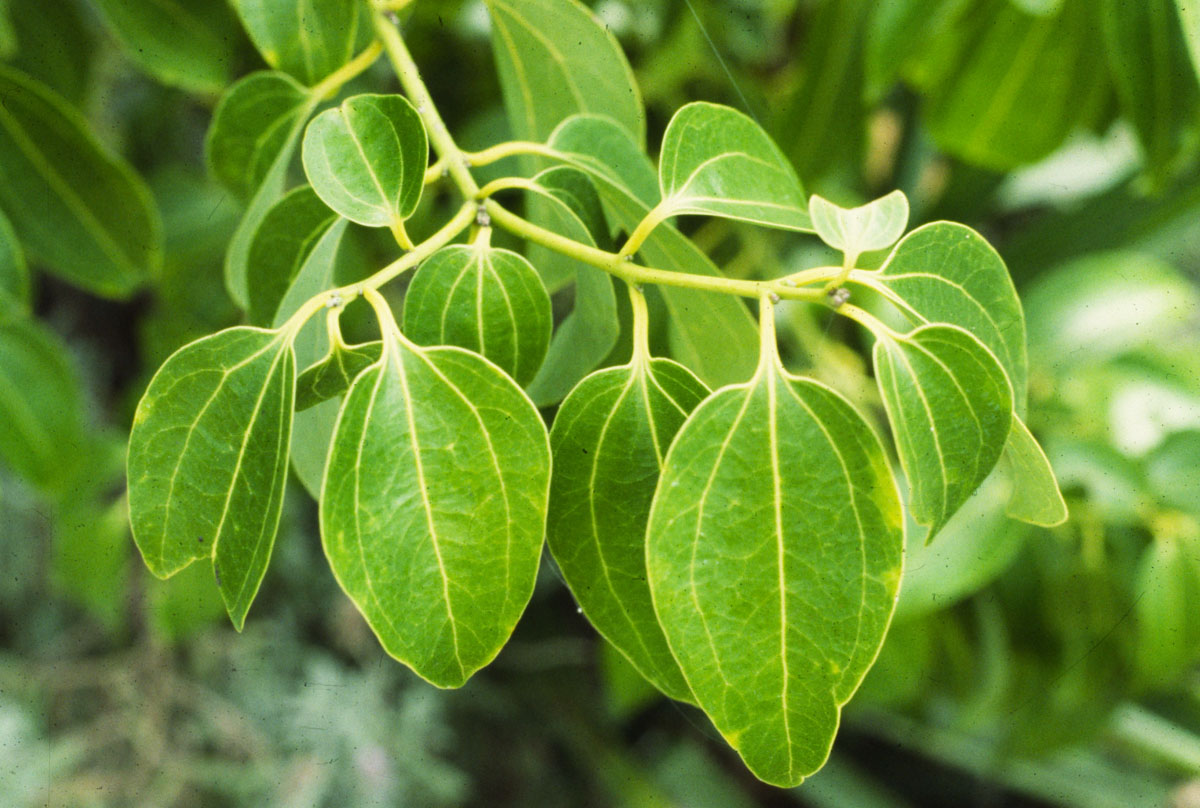
Leaves-
12.5-20 cm long, 5-7.5 cm wide at the centre, 3 converging
nerves from base to apex young leaves pink, petiole 7.5-13 mm long, margin
entire, apex acute or accuminate, both surfaces smooth, stomata paracytic odour,
aromatic, taste, slightly sweet, mucilaginous and aromatic.
Histology:
Petiole and midrib-transverse section of petiole and midrib
shows epidermis externally covered with cuticle, uniseriate, multicellular (1
to 3 cells), trichomes present, oil cells single or in group, isolated large
stone cells, much lignified showing striations found scattered, most of the
parenchymatous cells of cortex with reddish-brown contents, pericycle
represented by a few layers of sclerenchymatous cells, stele more or less planoconvex
as in the midrib of leaf, xylem on upper and phloem on lower side consisting of
usual elements, present.
Lamina-transverse section of lamina shows dorsiventral
structure, represented by palisade tissue on upper and spongy parenchyma on lower
side, epidermis same as in midrib, externally covered with cuticle, below upper
epidermis single row of closely packed palisade layer followed by multilayered,
irregular, thin-walled cells of spongy parenchyma without intercellular spaces,
idioblasts containing oil globules present in mesophyll and also in palisade,
lower epidermis covered externally with cuticle, lamina intervened by several
small veinlets: vascular bundles covered with thick-walled fibres on both side.
- » Classification and names of tejpatra
- » Synonyms and definitions of tejpatra
- » Drug Properties of tejpatra
- » Chemical Constituents of tejpatra
- » Standardization of tejpatra
- » Parts used and Dosage of tejpatra
- » Morphology and Histology of tejpatra
- » Distribution and Conservation of tejpatra
- » Cultivation of tejpatra
- » tejpatra in the market
- » Medicinal Uses of tejpatra
- » Researches and clinical trails of tejpatra
- » tejpatra in other sytems of medicine
- » Ayurvedic formulations with tejpatra
- » Images of tejpatra

Website Administrator
This article is incomplete. If you feel you can make a contribution, please let us know by sending email to mail@ayushvedah.com, we may consider your request. Thank you.