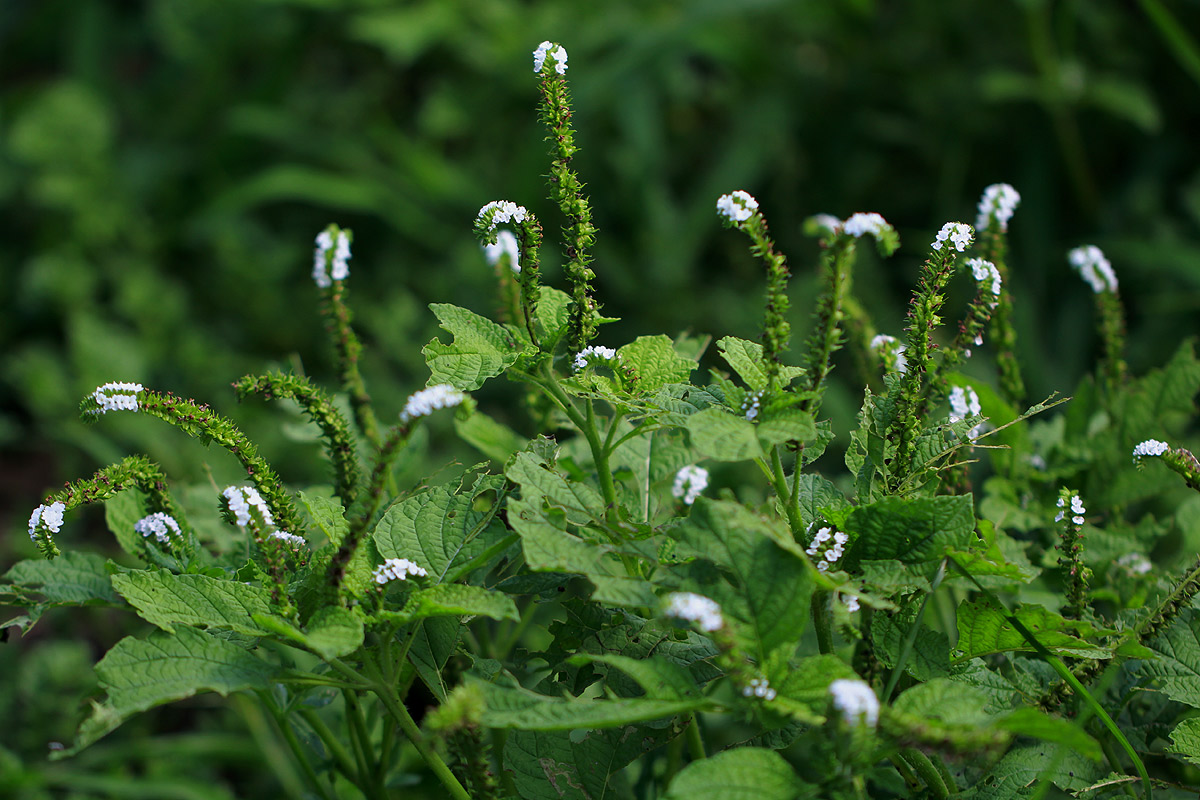
vikankata :

Morphology:
Deciduous shrubs or small trees, about 3-7 m tall, usually armed with simple and branched spines, branches with sympodial growth. Leaves simple, alternate, variable, obovate-ovate, suborbicular-oblong, about 1.5-6 x 1-3 cm across, base cuneate to obtuse, sometimes 3-5 pliveined, margin lobed to coarsely serrate-crenate, apex acute, obtuse to sometimes slightly emarginate, leaves often clustered towards apices, lateral veins 5-8 on either side of the midrib, impressed above and slightly prominent beneath, glabrous above, glabrous beneath or pubescent to softly tomentose on the veins beneath, thicker near the midrib and diminishing towards the margins, lamina thick to thin, membranous, chartaceous to subcoriaceous, shiny, petiole reddish, minutely hairy, about 5-10 mm long, stipules minute early caducous or absent. Inflorescence in shortly pedunculate axillary and terminal raceme fascicles or panicles, bracteate, few flowered. Flowers unisexual (dioecious), hypogynous, greenish yellow, about 4 mm across, pedicels articulate, glabrous or hairy, about 3-5 mm long, sepals 4-5, imbricate, connate near base, ovate, margin ciliate, apex obtuse, hairy inside, subglabrous outside, petals absent, extrastaminal disc, with distinct glands inserted before sepals. Male flowers: Stamens numerous, filaments filiform, base minutely hairy, about 2.5 mm long, anthers 2 loculed, versatile, globular, dorsifixed, pollen fleshy, tricolporate, reticulate, pistillode absent. Female flowers: Ovary superior, globose, surrounded by disc, carpels 3-6, incompletely loculed, connate, with intruding placentae, ovules often 2 per locule, style 5-6, little or not connate, stigma slightly recurved, shortly bilobed. Fruit indehiscent berry, ellipsoid-globose, about 5-10 mm across, when ripe first red and turning to dark purple, with 2 superposed pyrenes in per locule. Seeds 5-6, ovoid-obovoid, thinly coriaceous, non arillate, pale yellow to brownHistology:
Leaf-
Midrib – Epidermis, single layered, covered externally with thin cuticle; followed by 1 or 2 layers of collenchyma and 3 to 5 layers parenchyma; lower epidermis with 2 or 3 layers of adjacent collenchyma and 2 or 3 layers of parenchyma; vascular bundle single, situated in the centre, covered by fibre sheath on both sides; a few unicellular, hooked, trichomes present on lower surface; a few rosette and prismatic crystals of calcium oxalate scattered in parenchyma cells.
Lamina – Epidermis single layered on both surfaces, covered with thin cuticle; a few simple, unicellular hairs with blunt tips present on lower surface; 2 layers of palisade cells and 2 or 3 layers of spongy parenchyma cells present; rosette and a few prismatic crystals of calcium oxalate present in epidermis, palisade and spongy parenchyma cells; a few veinlets present in between palisade and spongy parenchyma; stomata anisocytic, present on lower surface; palisade ratio 2 or 3; vein islet number 8 to 10 per sq. mm; veinlet termination number 10 to 12 per sq. mm; stomatal index 24 to 26.
- » Classification and names of vikankata
- » Synonyms and definitions of vikankata
- » Drug Properties of vikankata
- » Chemical Constituents of vikankata
- » Standardization of vikankata
- » Parts used and Dosage of vikankata
- » Morphology and Histology of vikankata
- » Distribution and Conservation of vikankata
- » Cultivation of vikankata
- » vikankata in the market
- » Medicinal Uses of vikankata
- » Researches and clinical trails of vikankata
- » vikankata in other sytems of medicine
- » Ayurvedic formulations with vikankata
- » Images of vikankata

Dr Mohamed Rifas
A dual country licensed Ayurveda Physician, currently working in Dubai as Head of Ayurveda and Yoga department. He also works as visiting doctor for Dr Hassan Ayurveda Brain and Spine Specialty Hospital. He is specialized in joint issues, brain and spine related issues and gastrointestinal issues with respect to anxiety.
Doctor profile: Click here