
valika :
Geographical distribution:
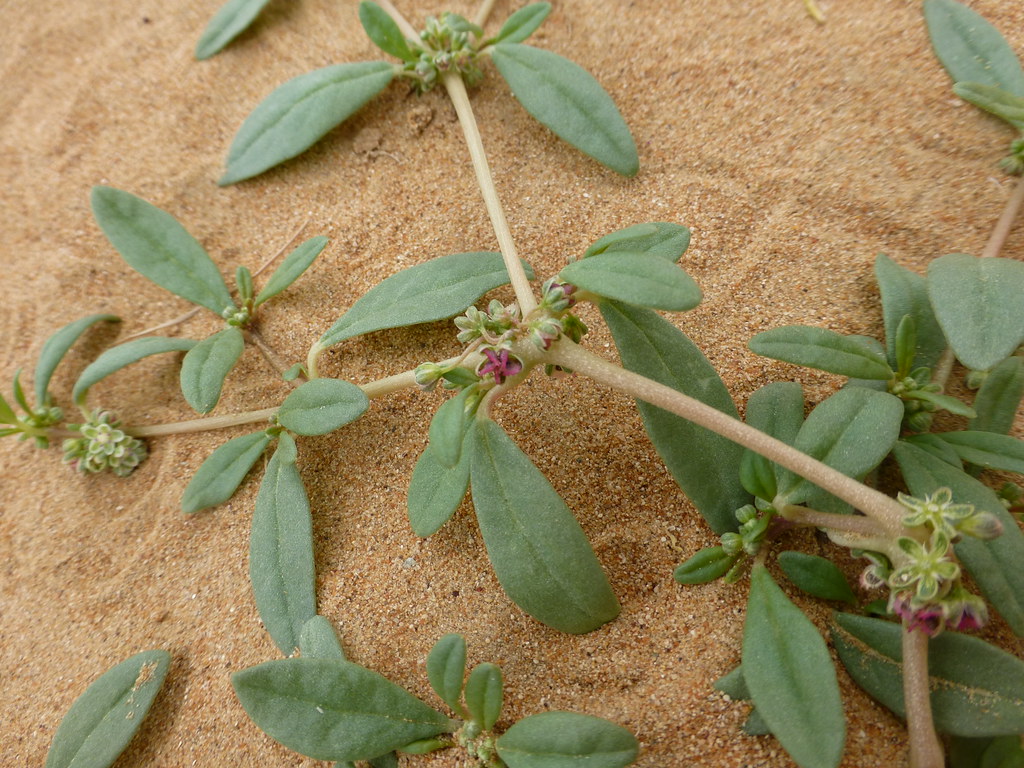
A glabrous fleshy annual herb, very variable in size with branches from 1–2 cm to 70 cm long, occurring widespread in the northerly and dryer part of Region from Senegal to N Nigeria, and common in tropical and southern Africa, Madagascar and Asia. The plant is subject to fungal attack by Exobasidium gisekiae Allesch. which renders it pink or wine-red in colour, a situation accounting for the Fula name of ‘herdsmen’s henna’ and the Hausa name ‘stork’s henna.’The plant is occasionally eaten: as an emergency food in West Africa (3) and India (7), and elsewhere as an occasional vegetable (Kenya, 7; Tanganyika, 15; Somalia, 4). In Tibesti of northern Chad it is subjected to prolonged cooking, with hashed-up meat till nearly dry, when it is eaten as a condiment (10). It is eaten as a condiment in Zaïre (6). In Lake Province of Tanganyika the whole plant is eaten as a general strength restorative (14). Cattle and goats graze it in Senegal but in Chad all stock refuse it (1). In Ghana goats will take it and sometimes the plant is collected for fodder (7). The fruit is reputed to be poisonous (15), and it is perhaps the stage of growth that determines whether or not stock will graze it.The plant is sold in medicine markets to the north of the Region as a purgative (A. Chevalier fide 3). In E Africa (2) and in South Africa, Tanganyika and Madagascar the plant is taken for diarrhoea (15). In India, Indonesia, South Africa and Madagascar it is used as a taenicide (15). It is used in the West African region to rub on swellings in the same fashion as Portulaca (Portulacaceae) is used (3). In Lake Province of Tanganyika the stem pounded with butter is placed on aching muscles (13). In Sokoto it is reported as used on areas of pain, probably rheumatic (9). Pounded with other herbs and native natron it is made into poultices for sores in cattle in N Nigeria (3). In Tanganyika the green leaves are cooked and eaten for asthma (12); in Kenya the roots are made into a chest medicine (8), and Swahili of East Africa make the whole plant into a remedy against miscarriage (15). The sap is used on warts in India (5).Tannins are present in the plant (11, 15), and tannin-like principles α- and β$- gisekia are in the seeds and these are probably anthelmintic- » Classification and names of valika
- » Synonyms and definitions of valika
- » Drug Properties of valika
- » Chemical Constituents of valika
- » Standardization of valika
- » Parts used and Dosage of valika
- » Morphology and Histology of valika
- » Distribution and Conservation of valika
- » Cultivation of valika
- » valika in the market
- » Medicinal Uses of valika
- » Researches and clinical trails of valika
- » valika in other sytems of medicine
- » Ayurvedic formulations with valika
- » Images of valika

Website Administrator
This article is incomplete. If you feel you can make a contribution, please let us know by sending email to mail@ayushvedah.com, we may consider your request. Thank you.







Wonderful items from you, man. Ive consider your stuff prior to and you are just extremely wonderful. I actually like what you have bought here, certainly like what youre saying and the best way through which you assert it. You are making it enjoyable and you still care for to stay it wise. I cant wait to read much more from you. This is really a terrific site.