khor :
Taxonomical Classification
Kingdom: Plantae - Plants
Subkingdom: Streptophyta
Division: Magnoliophyta - Flowering plants
Class: Magnoliopsida - Dicotyledons
Order: Fabales
Family: Fabaceae
Genus: Acacia
Species: Acacia senegal
VERNACULAR NAMES
English: noneSynonyms
Synonyms in Ayurveda:Cultivation:
It is cultivated in India, Pakistan and Nigeria. Gum arabic
trees grow where annual rainfall is in the range of 380 to 2280 mm, and annual mean temperatures between 16.2°C and
27.8°C. It cannot survive frost but is particularly tolerant of drought. The gum arabic tree thrives in the drier parts of Sudan and
in the Northern Sahara. It can survive in places where drought lasts for 11 months. It thrives on rocky slopes and sandy soils,
but also on clay plains and cotton soils with a pH ranging from 5 to 8 (Kew Gardens, 2016)
Propogation:
Acacia senegal is mainly propagated by seeds.Harvesting:
These should be harvested before the pods have dried in order to prevent
insect attacks, and then treated with an insecticide, after which they will remain viable for many years in hermetic storage at
10°C.
Morphology:
Acacia senegal is a deciduous shrub, growing to 15 m tall and usually branched from the ground. Branches fork repeatedly and in mature trees commonly form a rounded, flat-topped crown.The trunk may vary in
diameter up to about 30 cm.
The bark is greyish-white, although in old
trees growing in the open it may be dark, scaly and thin, showing the
bright green cambium layer just below the surface if scratched with a nail.
The slash is mottled red.
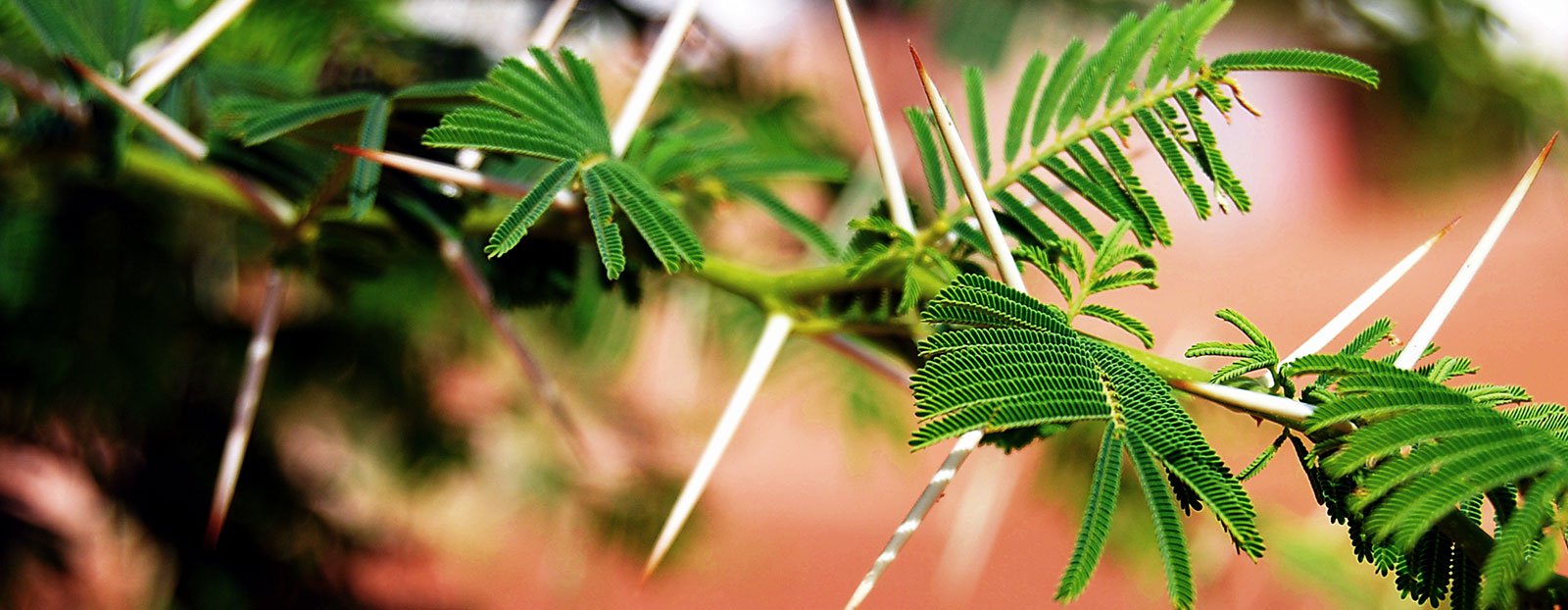
Powerful hooked thorns, 3-5 mm long, with
enlarged bases appear at the nodes of the branches, usually in 3s. They
are sharp, with some pointing forwards and others backwards.
Leaves bipinnate, 3-8 pinnae (glands between uppermost and lowermost
pinnae); rachis up to 2.5 cm long; pinnacles are pairs of 8-15, green; 2
stipular spines strongly recurved with a 3rd pseudo-stipular between them.
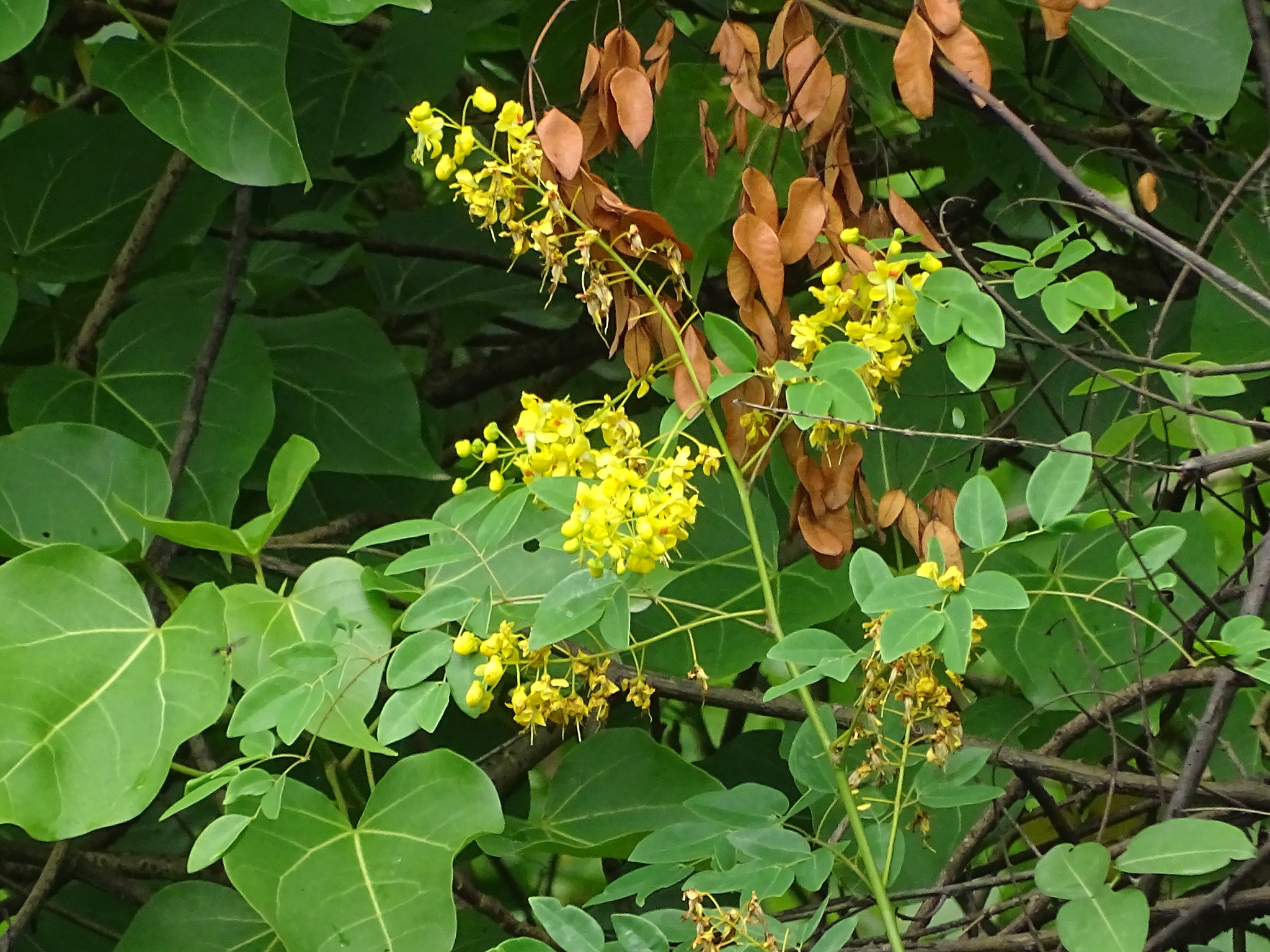
Flowers yellowish-white and fragrant, in cylindrical, axillary pedunculate
spikes, 5-10 cm long; calyx of each flower has 5 deep lobes, 5 petals and
a mass of short stamens; pistil inconspicuous.
The pods are straight, thin, flat, shortly stipitate and oblong (7.5 x 2 cm),
green and pubescent when young, maturing to shiny bronze, often with
dark patches and bearing prominent veins; seeds 3-6, smooth, flat, rather
small, shiny, dark brown.
ECOLOGICAL ASPECT:
Drought-tolerant, A. senegal is the characteristic species in the drier parts of Anglo-Egyptian Sudan and the northern Sahara and is to be found throughout the vast area from Senegal to the Red Sea and to eastern India. It extends southwards to northern Nigeria, Uganda, Kenya, Tanzania and southern Africa. In India it is found chiefly in Sind and Ajmere. In Sudan, the tree both exists in the wild and is cultivated - mainly on sandy hills, but it also grows well in cotton soil. A. senegal is associated with a wide range of vegetation types, from semi-desert grasslands to Anogeissus woodlands. It prefers clay plains and rocky hill slopes. It can easily become a serious weed. South Africa and Australia have policies against further introduction of this noxious weed.- » Classification and names of khor
- » Synonyms and definitions of khor
- » Drug Properties of khor
- » Chemical Constituents of khor
- » Standardization of khor
- » Parts used and Dosage of khor
- » Morphology and Histology of khor
- » Distribution and Conservation of khor
- » Cultivation of khor
- » khor in the market
- » Medicinal Uses of khor
- » Researches and clinical trails of khor
- » khor in other sytems of medicine
- » Ayurvedic formulations with khor
- » Images of khor

Website Administrator
This article is incomplete. If you feel you can make a contribution, please let us know by sending email to mail@ayushvedah.com, we may consider your request. Thank you.